Regional Strategy
Economic Development Strategy: How Regions Capture Federal Capital
Your region lost a $500M manufacturing facility to a competitor. They saw the capital deployment coming. You didn't. Here's how to build regional capital intelligence.
When Capital Flows Past Your Region
The federal government announced $500M in CHIPS Act funding for semiconductor manufacturing. The RFP went out nationally. Your region was competitive. You had labor. You had land. You had connections.
But another region got the grant. Why? Because their economic development organization saw the capital deployment coming six months early. They had been monitoring Congressional communications, agency budgets, and Federal Register notices about semiconductor investment. Six months before the RFP was public, they were positioning: preparing site documentation, meeting with industry partners, coordinating with local government.
Your region saw the RFP when it was public. You had 90 days to respond. You lost to a region that had six months to position.
The Three Components of Regional Capital Intelligence
Economic development organizations that win federal capital for their regions operate three simultaneous intelligence systems:
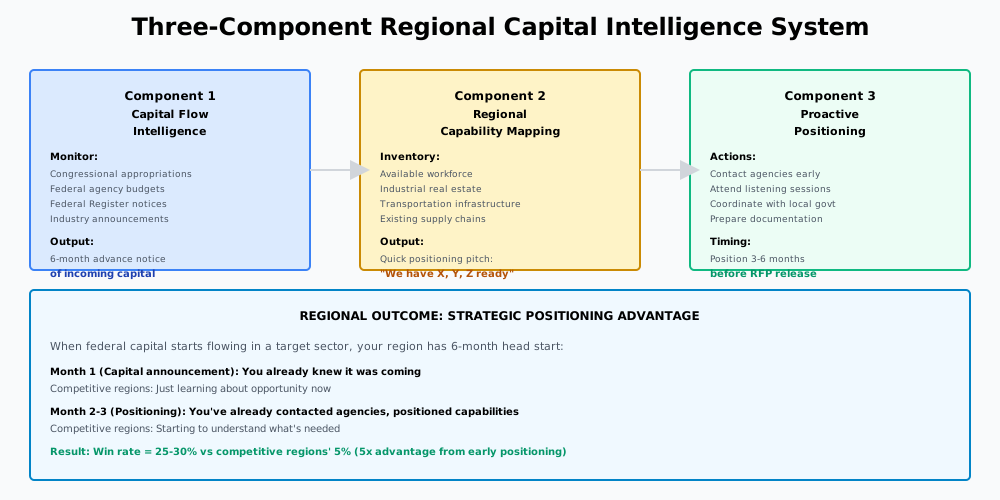
Figure 1: Three simultaneous systems create regional capital advantage: intelligence gathering, capability assessment, and proactive positioning.
Component 1: Capital Flow Intelligence (6-month lead)
Monitor where federal capital is flowing: Congressional appropriations, agency strategic plans, Federal Register notices, sector-specific investment announcements. Know six months before the public does where the government is deploying capital.
For your region, this might focus on: advanced manufacturing (CHIPS), clean energy (IRA), broadband (BEAD), water infrastructure (IIJA), transportation (USDOT programs).
Component 2: Regional Capability Mapping (Continuous update)
Maintain current inventory of your region's assets: Available workforce and training capacity. Available land and industrial space. Existing infrastructure. Supply chains and supporting industries. Research institutions and innovation centers. Existing companies operating in target sectors.
This inventory is your competitive asset. When capital starts flowing in a sector, you can say: "We have X workforce, Y land, Z existing supply chain capability. We're ready."
Component 3: Proactive Positioning (3-6 months early)
Once you see capital flowing in a sector you're positioned for, proactively reach out to federal decision-makers. Not after the RFP is public. Before. "We're aware you're considering manufacturing investments. Here are our regional assets and why we're a strong location."
This positioning—done three months before RFP release—dramatically increases your region's likelihood of being selected.
Building Regional Intelligence Infrastructure
Most economic development organizations don't have formal capital intelligence systems. They react to opportunities they see. Competitive regions build systematic approaches:
Step 1: Identify Your Target Sectors (Weeks 1-4)
Determine which federal capital flows matter for your region. Clean energy? Advanced manufacturing? Broadband? Healthcare? Defense? Choose 2-4 focus areas where your region has existing strength or clear positioning opportunity.
Step 2: Establish Capital Flow Monitoring (Weeks 5-8)
Set up monitoring of federal sources in your focus sectors: Congressional appropriations, agency budgets, Federal Register notices, industry association announcements. Automated alerts when relevant funding is announced.
Step 3: Map Regional Capabilities (Weeks 9-16)
Systematically document regional assets: workforce availability by sector, available industrial real estate, transportation infrastructure, research capabilities, supply chains, existing anchor companies. Update quarterly.
Step 4: Establish Positioning Strategy (Ongoing)
When opportunities matching your focus sectors appear, engage early. Contact federal agencies. Attend listening sessions. Provide input during requirement development. Position your region as a logical destination.
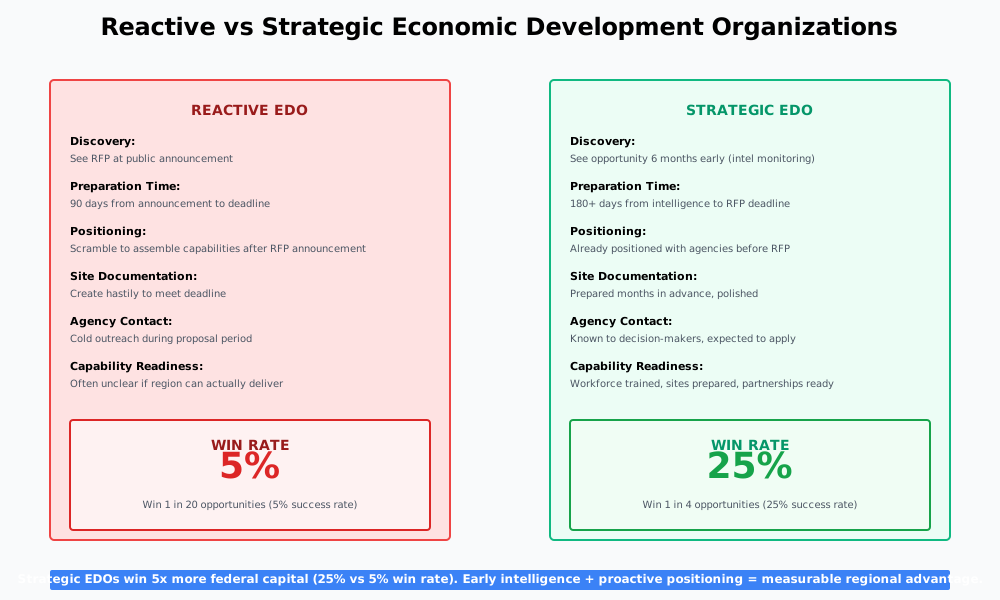
Figure 2: Strategic EDOs operating intelligence systems win 5x more often than reactive EDOs. Early positioning and capability readiness create measurable competitive advantage.
The Compounding Regional Advantage
Regions that implement capital intelligence systems don't just win more federal investment in Year 1. They compound their advantage:
- Year 1: Win 1-2 federal capital projects. $50-200M in investment lands in region. Build case studies and relationships with federal agencies.
- Year 2: Federal agencies know your region is a strong execution location. You're in their mental map for future opportunities. Win 2-3 projects. $200-500M in cumulative investment.
- Year 3+: Agencies approach your region proactively for appropriate opportunities. You're a known, trusted regional partner. Win rate reaches 25-30% of relevant opportunities in your focus sectors. Compound investment benefit compounds.
Digital Employees Enable Regional Intelligence
Building this infrastructure manually requires dedicated staff. Your EDO would need someone monitoring Federal Register daily, tracking Congressional activity, monitoring agency announcements. That's a full-time job.
Digital employees can handle the continuous monitoring 24/7 while your EDO team focuses on positioning and relationship-building—the work that actually wins capital for your region.
The Regional Decision: Strategic or Reactive
$2.5 trillion in federal capital is flowing. Some of it belongs in your region. Some of it will go to competitors that see it coming. The difference between strategic and reactive regional development is measurable: 5x difference in capital captured.
Build capital intelligence now. Monitor your focus sectors. Map your capabilities. Position proactively. The federal capital flowing past your region can be redirected with the right infrastructure and strategy.
Build Your Regional Capital Intelligence System
Stop reacting to federal opportunities. See them coming 6 months early. Position your region proactively. Digital employees handle continuous monitoring. Your team handles positioning and relationships.
Explore Capital Event IntelligenceContinuous monitoring of federal capital flows in your target sectors. Early warning intelligence. Position your region for $100M+ in federal investment.